
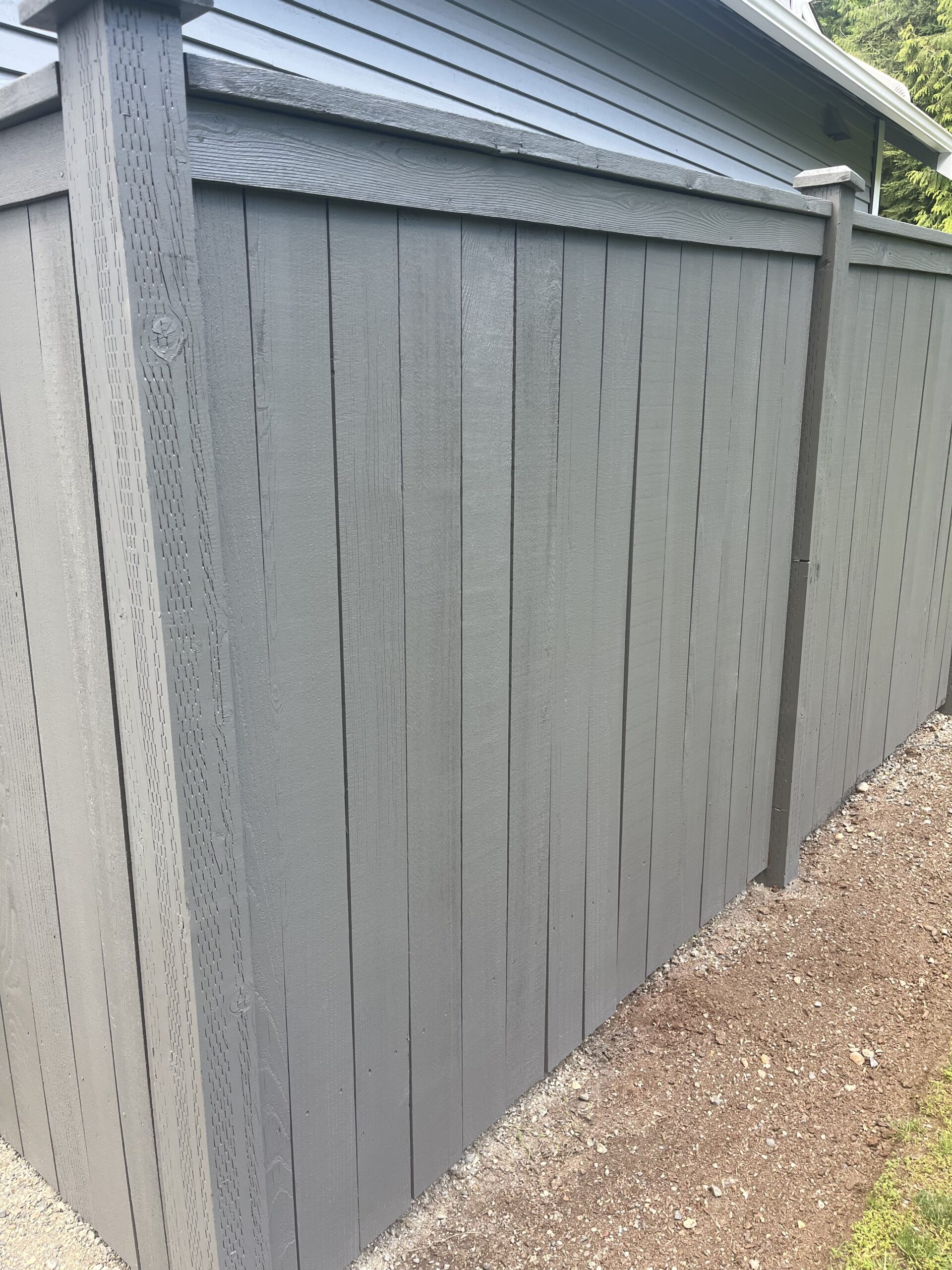
Is your fence looking weathered, gray or just tired? A fresh coat of paint or stain can transform your fence from an eyesore into one of the best‑looking features of your yard—while adding years of protection against the elements. But before you pick up a brush, there are a few important decisions to make. In this video, our team walks through everything you need to know about painting and staining fences, from choosing the right product to getting a finish that lasts.
Why Your Fence Needs Protection
Fences take a beating. They’re exposed to rain, wind, direct sunlight and temperature swings every single day—and in Seattle’s climate, moisture is the biggest threat of all. Untreated wood absorbs water, which leads to swelling, warping, splitting and eventually rot. Even pressure‑treated lumber, while more resistant to decay, will turn gray and begin to deteriorate if left unfinished. Painting or staining your fence creates a protective barrier that keeps moisture out, blocks UV damage and dramatically extends the life of the wood.
Beyond protection, a well‑finished fence makes a real difference in how your property looks from the street. Curb appeal matters whether you’re planning to sell or simply want your home to look its best, and a clean, freshly finished fence ties the whole exterior together.
Choosing the Right Product for Wooden Fences
For wooden fences, we recommend using a high‑quality latex‑based paint or stain. Latex products are more flexible than their oil‑based counterparts, which means they can expand and contract with the wood as temperatures and humidity levels change throughout the year—a critical advantage in the Pacific Northwest. Latex finishes are also easier to clean up, dry faster and won’t yellow over time the way some oil‑based products can.
The choice between paint and stain depends on the look you’re going for and the condition of the wood. Stain penetrates the grain and highlights the natural character of the wood, making it a great choice for newer cedar or redwood fences where the texture is part of the appeal. Paint, on the other hand, covers the surface completely and hides imperfections—ideal for older fences that have been repaired or patched over the years.
Color Selection and Design
Choosing a color for your fence is more than a matter of personal preference—it should complement the overall look of your home’s exterior. A fence that harmonizes with your siding, trim and landscaping creates a cohesive, polished appearance. White and neutral tones are classic choices for a clean, traditional look, while darker stains and bold paint colors can add drama and define the boundaries of your outdoor space.
If you’re unsure where to start, our team can bring samples to your property and help you visualize how different colors will look against your home. We consider factors like the direction your fence faces, how much sunlight it receives and the surrounding landscape so you end up with a result you love.
Painting Metal Fences
Metal fences have their own set of requirements. The primary goal with a metal fence is preventing rust, and painting is the best defense. The process starts with a primer specifically designed for metal surfaces—this creates a smooth, adhesion‑friendly base and blocks rust from developing beneath the topcoat. After priming, we apply an acrylic‑based paint that’s flexible enough to handle temperature fluctuations without cracking and resistant enough to stand up to rain, wind and sun exposure year after year.
If your metal fence already shows signs of rust, the affected areas need to be cleaned back to bare metal with wire brushing or sanding before priming and painting. Skipping this step means the rust will continue spreading under the new finish, and you’ll be back at square one within a season or two.
Preparation Is Everything
Whether you’re working with wood or metal, the quality of a fence‑painting project depends heavily on what happens before the first coat goes on. For wood fences, preparation includes cleaning the surface to remove dirt, mildew and loose debris—often with a pressure washer set to an appropriate level that cleans without damaging the wood grain. Any loose or peeling old finish needs to be scraped and sanded. Boards that are split, warped or rotted should be replaced, and nail heads need to be set below the surface and filled.
Thorough surface preparation is one of the main reasons professional fence painting lasts so much longer than a quick DIY coat. When the surface is properly cleaned, repaired and primed, the finish bonds tightly and resists the weather far more effectively.
How Long Does a Fence Finish Last?
The lifespan of a painted or stained fence depends on the product quality, the thoroughness of the preparation and the level of exposure to the elements. In general, a well‑applied paint finish on a wood fence can last five to seven years or more before it needs attention. Stain finishes typically need to be refreshed every three to five years, but the maintenance process is simpler since stain doesn’t peel the way paint can. Metal fence paint, when applied over a proper primer, can last even longer—often a decade or more with minimal touch‑ups.
Don’t Wait Until It’s Too Late
One of the most common mistakes homeowners make is waiting until their fence is visibly damaged before taking action. By the time wood is splitting, graying and showing signs of rot, the repair costs climb quickly—and in some cases, sections of the fence may need to be replaced entirely. A proactive approach to fence maintenance, including regular cleaning and timely recoating, saves money over the long term and keeps your property looking its best.
If your fence is overdue for some attention, American Classic Painters can help. We handle everything from cleaning and prep to product selection and application—for both wood and metal fences across Seattle and the surrounding areas. Contact us today to schedule a consultation and get a free estimate for your fence project.